

Dear reader,
There is nothing quite like the view flying into Velana International Airport.
Atolls upon atolls (ring-shaped coral reef islands formed over millions of years as a volcanic island subsides) below. Pristine sandbanks galore. The richest shades of sea blue and aquamarine. Thoughtfully designed overwater bungalows and resorts. And every eye in the plane glued to the windows.
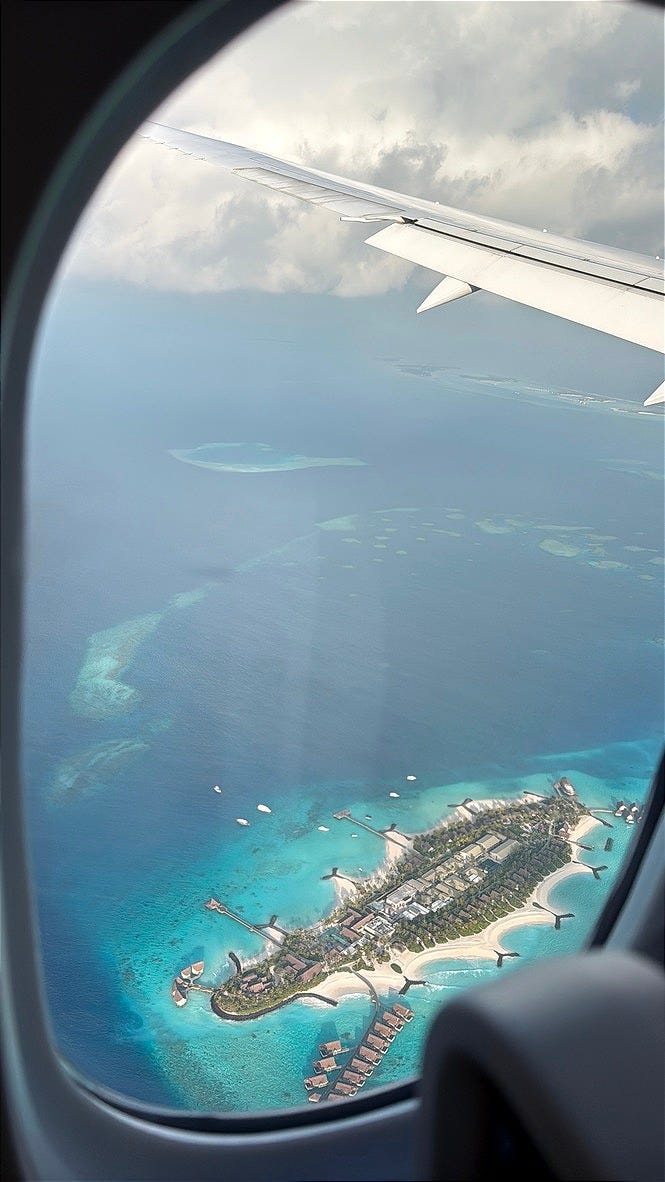
Why did I go, you might ask? I needed some tailwind after years of headwind. A friend told me this last year: the worst thing that could happen after everything you’ve been through is living with hardness of heart. And I can attest that this rings true. I find that the only remedies to feeling completely and utterly stuck/lost are wonder & awe, nature immersion, and true community. Even though I had never been there before, one place came to mind in my search for all three remedies. The Maldives has been on my bucket list for as long as I can remember. And being able to go with my mother, a fellow ocean creature, was the coconut on top.
However, not everything goes swimmingly the first time around — our journey there was filled with surprises. Our Qatar Airways flight was cancelled as we were boarding. So instead, we re-rerouted a day later through a connection in Istanbul on Turkish Airlines. I had a dazzling time taking in the amalgamation of European and Asian cultures walking through IST Airport as it drizzled outside. Pretty neat to be in the only city in the world that straddles two continents. And can we talk about their refreshing green apple drinks and flavorful soups??
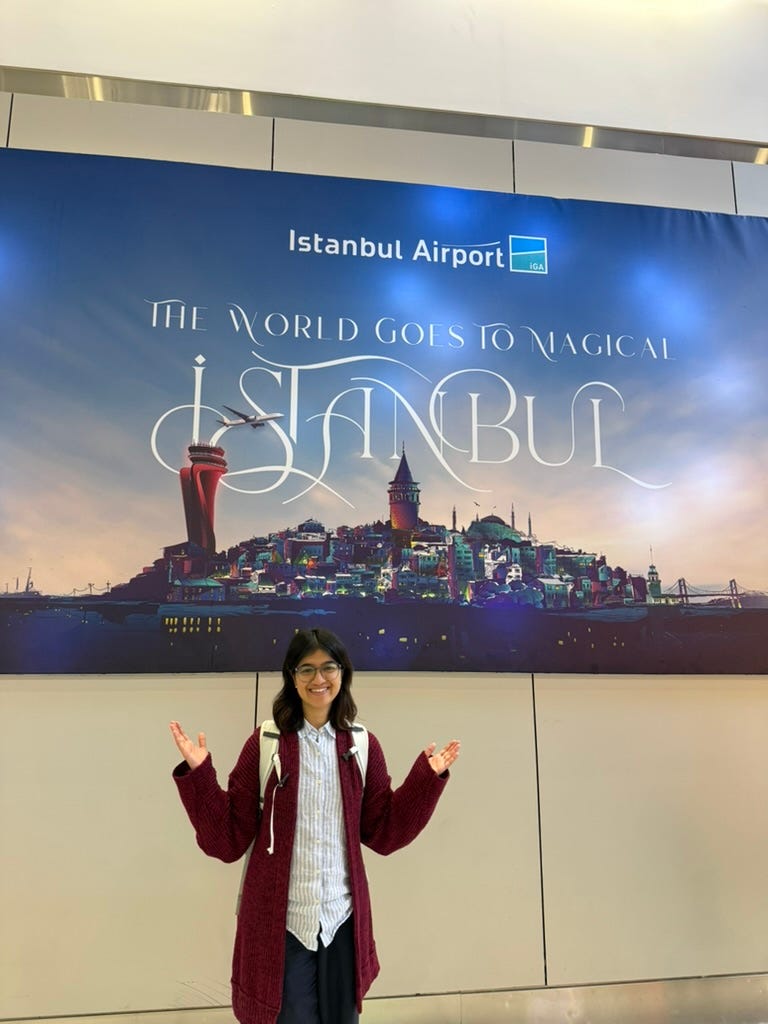
Even when it doesn’t look/sound/feel like it, the Universe is usually like “what did I atoll you?” Everything works out. Trust that.
Even in the process of the inconvenience that led us to push our itinerary back by one day, I learned that Maldivians are masters of hospitality. There’s a saying derived from Sanskrit: “the guest is god.” I felt that level of hospitality when our guesthouse host Nashid masterfully adjusted to our schedule change.
Our flight was filled with German, French, and various other European families, honoring annual beach traditions by the sounds of it. Soon, I landed among the islands! Upon arriving at the airport, a wave of humidity enveloped us and my joints bounded with glee after coming from the unrelenting winter in the US. A boat, known as a water taxi, greeted us across the street from the airport. We were in it now, island country ahoy! Maldivian boating experts and those welcoming us to the islands showed me that hospitality is not a nice-to-have, afterthought accessory, but a non-negotiable for longevity, efficacy, and high occupancy in business, as seen in their thriving tourism, fish for mostly European exports, and water factories.
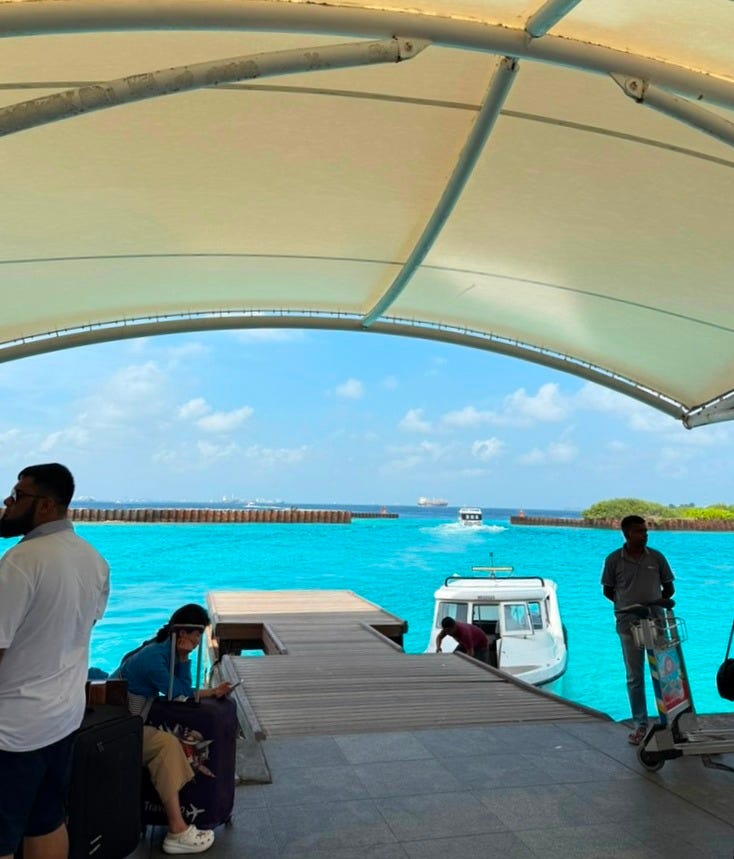
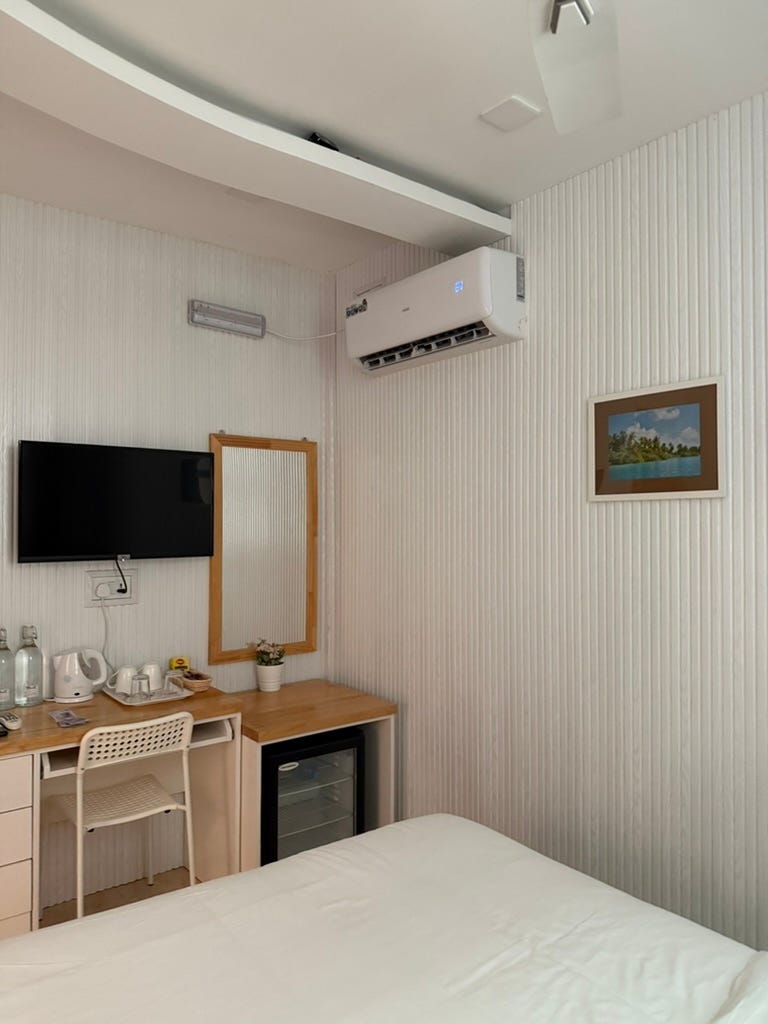
Our speedboat taxi ride was about 25 minutes and cut through the channel at its bumpiest peak. We bounced the whole way, butterflies in my stomach on every lift like a baked in rollercoaster. Upon arriving, we settled into our locals’ island, population 1,000, Himmafushi in the North Malé Atoll. Shoutout to Keveli Guesthouse.
The jet lag was real, but we were eager to get into the water and find our sea legs. The equatorial sun illuminated the water so gently, but it is deceivingly strong. The sun left me with a spotted tan all over my back — in a couple of hours, I resembled the whale shark, a cherished species that can be found swimming around the south atolls and UNESCO heritage sites.
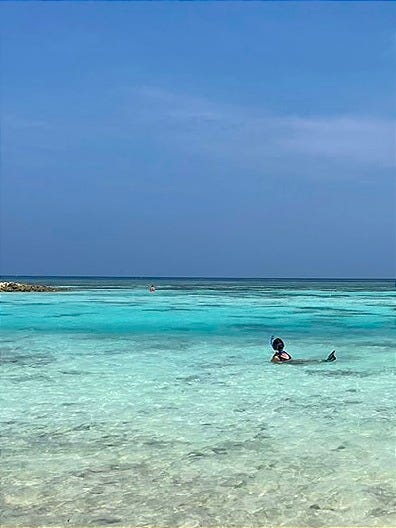
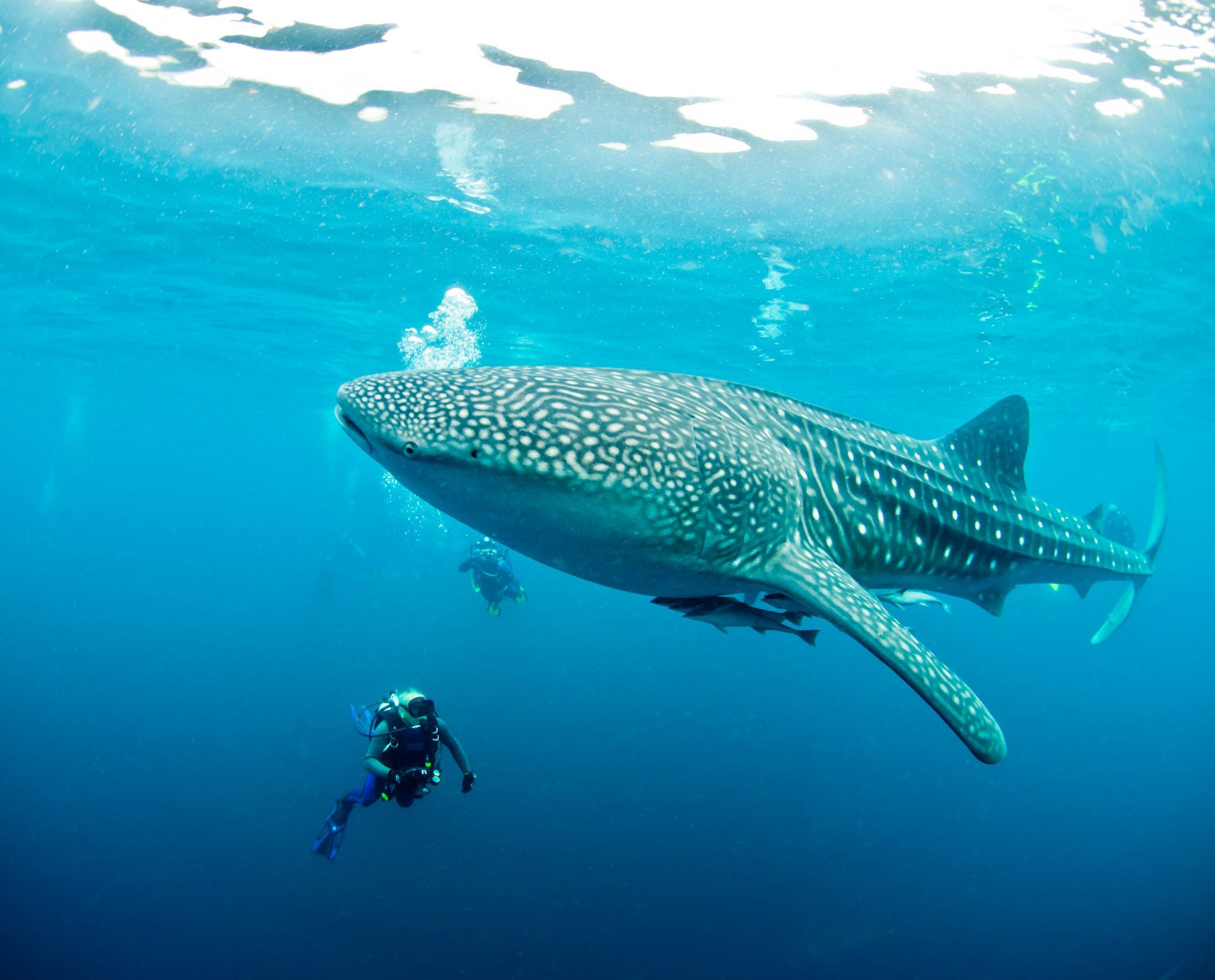
Here, you can’t just drive a car or catch an easy ride, though there are so many motorbikes for a place with no roads. You have to seek out a boat transfer (bonus: incredibly refreshing wind and sea spritz) and plan five steps in advance for every choice you make. Here, they make this chess-like dance of living look easy peasy ocean breezy. Here, convention is routinely challenged. And yet, existence is glaringly simple.
The Maldives is the lowest-lying country on Earth, and so close to sea level, it is clearly elevated by its people’s strength of values and character. On this locals’ island, people live with the least amount of urgency I have ever witnessed and yet everything that matters is accomplished — the culture mimics the nature. Now more than ever, I believe it’s worth it to question how things are done and to question if better really means “more” and/or “faster.”
Case in point: all the petrol-run fishing, tourism, and shipping boats in the Maldives should be converted to solar-electric boats (shoutout to Navalt for their work in India). Petrol washed up on our feet a couple times at Bikini Beach, so you can imagine what the petrol is doing to the marine life.
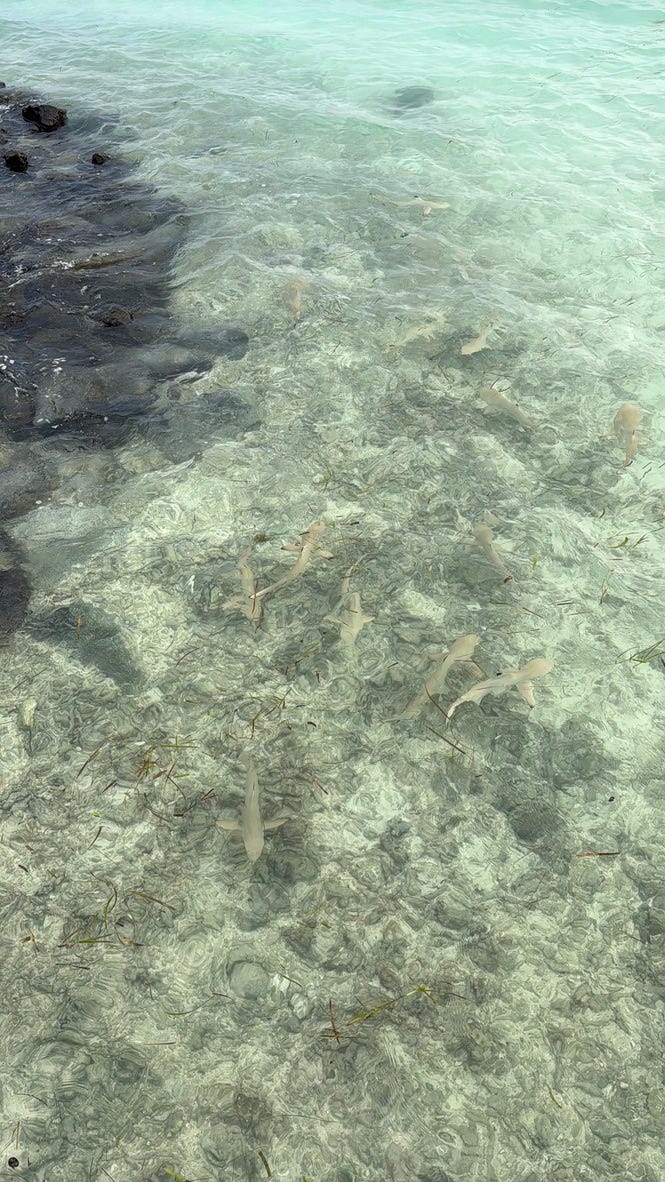
15 growing black-tip sharks can be spotted in the same corner of the lagoon on my daily morning walks — they trust that the fishermen will share some of their catch every day. Imagine if we humans exhibited this level of trust in one another! We share breakfast with a retired French psychoanalyst who has been diving here and all around the world for 36 years. Each creature holds a special place in her heart. She says more people die by mosquitoes than shark attacks. “Don’t be afraid.”
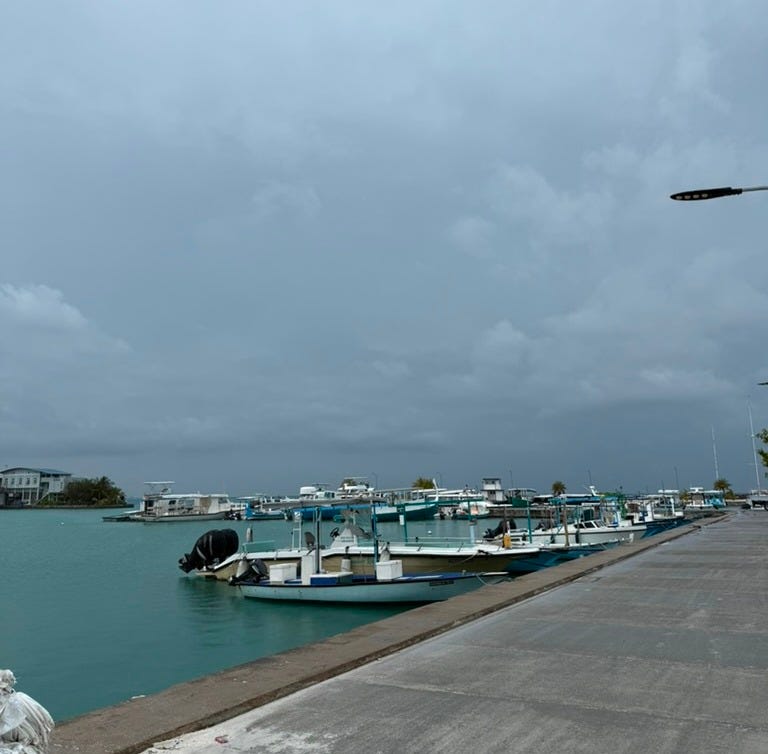
In “peak dry season,” there were a few intensely rainy days that we didn’t pack for. Nevertheless, we enjoyed them under the roof of the jetty-side cafes. Anything goes in the tropics, even a rainy dry season!
The hidden lesson I’m walking away with: don’t constantly brace for conditions, surrender to and always embrace adaptations.
In preparation for the trip, I grew fond of the poetry of the native language Dhivehi. Dhivehi is rooted in Sanskrit and is influenced by Arabic (given that it is a 100% Muslim country), Tamil (due to its proximity to Sri Lanka), and Malayalam (my mother’s mother tongue), and when broken down, it translates to “island dweller.” A Dhivehi proverb, known as ‘harubas,’ that is staying with me is “Lafaa odiah isnuvaasheve. Dhuvaa odiah fas nuvaasheve.” Meaning: don’t rush when the boat arrives, don’t delay when it departs. Take on opportunities as they come, and don’t dwell on them when it’s time to leave. This is reminiscent of what my grandma used to tell me: “garam garam pena, jaldi jaldi chello.” Meaning: drink drinks piping hot, and quickly quickly go (move forward quickly).
The day before we were set to depart, we got to have the experience of a lifetime out at sea, the furthest out I had ever gone. Genuinely, my inner child was living the dream and was so healed by this experience. On the snorkeling schedule for the day was 1. coral gardens 2. Himmafushi sandbank 3. stingray spot. Shoutout to our wonderful guides Mujey and Ammu. Mujey drove the boat and Ammu, who is like a natural ocean creature swimming effortlessly underwater like Diego in Ice Age after he conquers his fear and masters stalking the prey in the water, snorkeled in the water with me.
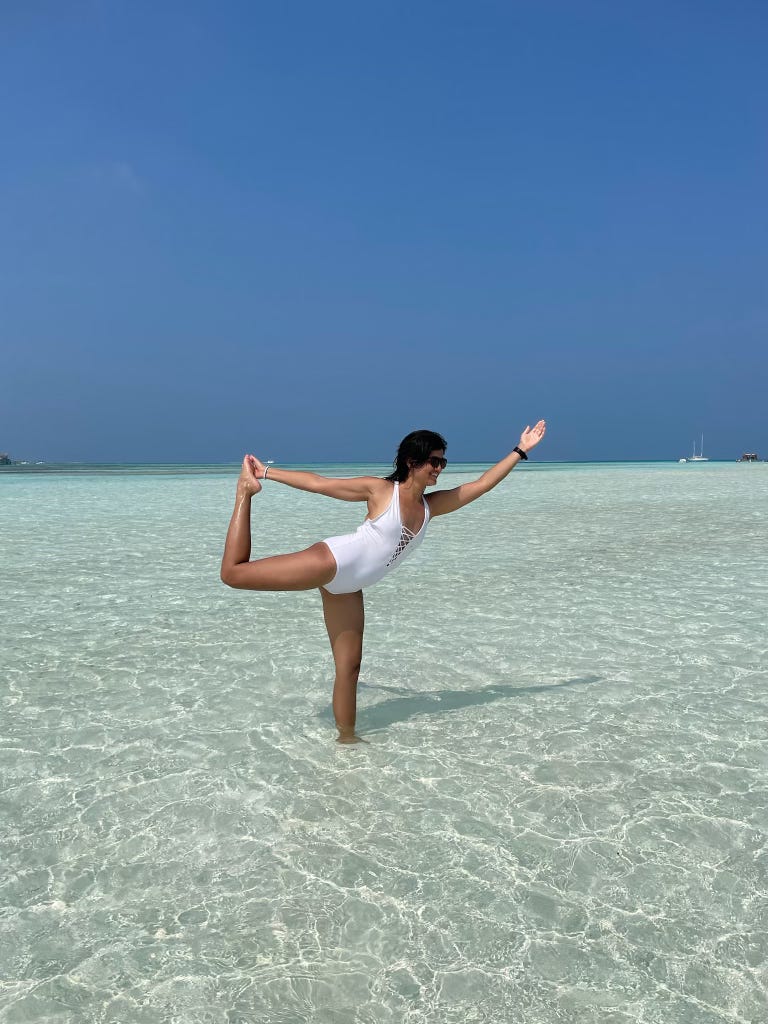
At the immaculate Himmafushi sandbank, there is what can only be described as an endless view. Ocean in every direction and yet you can stand and practice yoga in the middle of it all at half tide. I laid on sand in the middle of the ocean. It is something that cannot be explained and must be experienced.
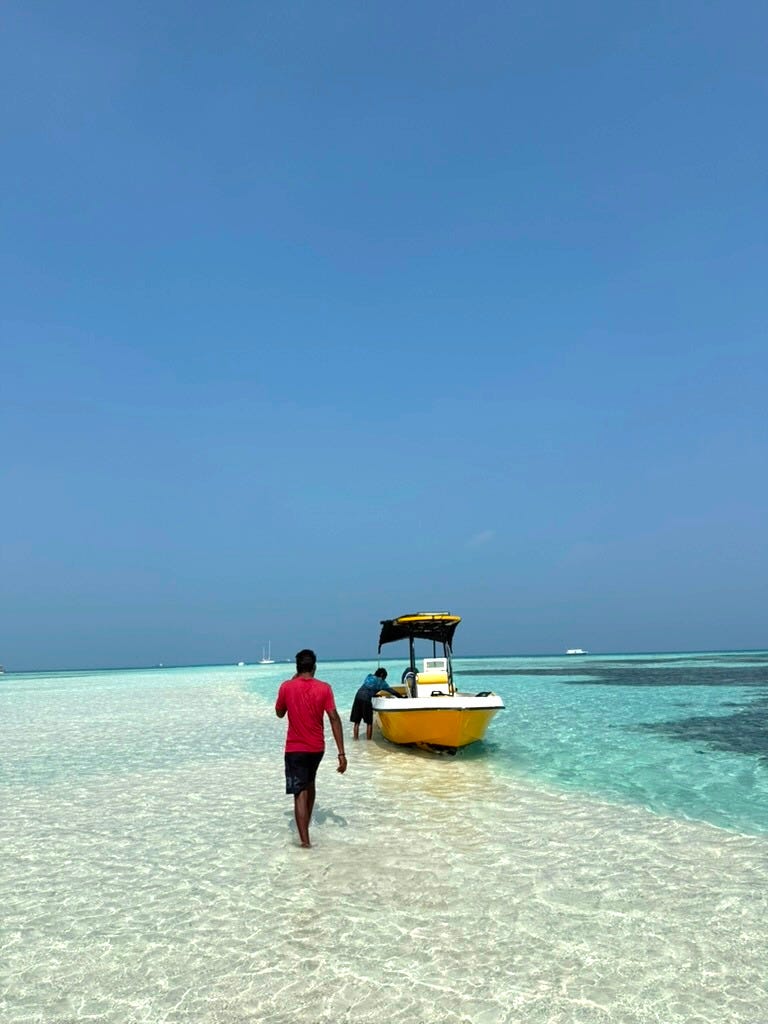
When it comes to deep-sea snorkeling, there is such empowerment in sitting on the stable edge of a boat with flippers on and making the choice to jump into the warm, lush shades of blue of the Indian Ocean. Then, submersion.
I just have to say that the stillness, the profound quiet shook me to my core the most. I can still hear it. Under the water, there is so much happening, there is such a zest for life, and yet, not a sound. No edit, no filter. That’s just how it is. As someone who has always gravitated toward the beauty of sound, this was the first time in my life that I’ve experienced the most majesty in the absence of sound. It was a humbling experience. My mind didn’t race, my nervous system was not in fight, flight, freeze, or flop mode (shoutout to Jenn at Viasomatic for equipping me with the initial tools), and I was floating and swimming in the primary feeling of awe. I was just being.
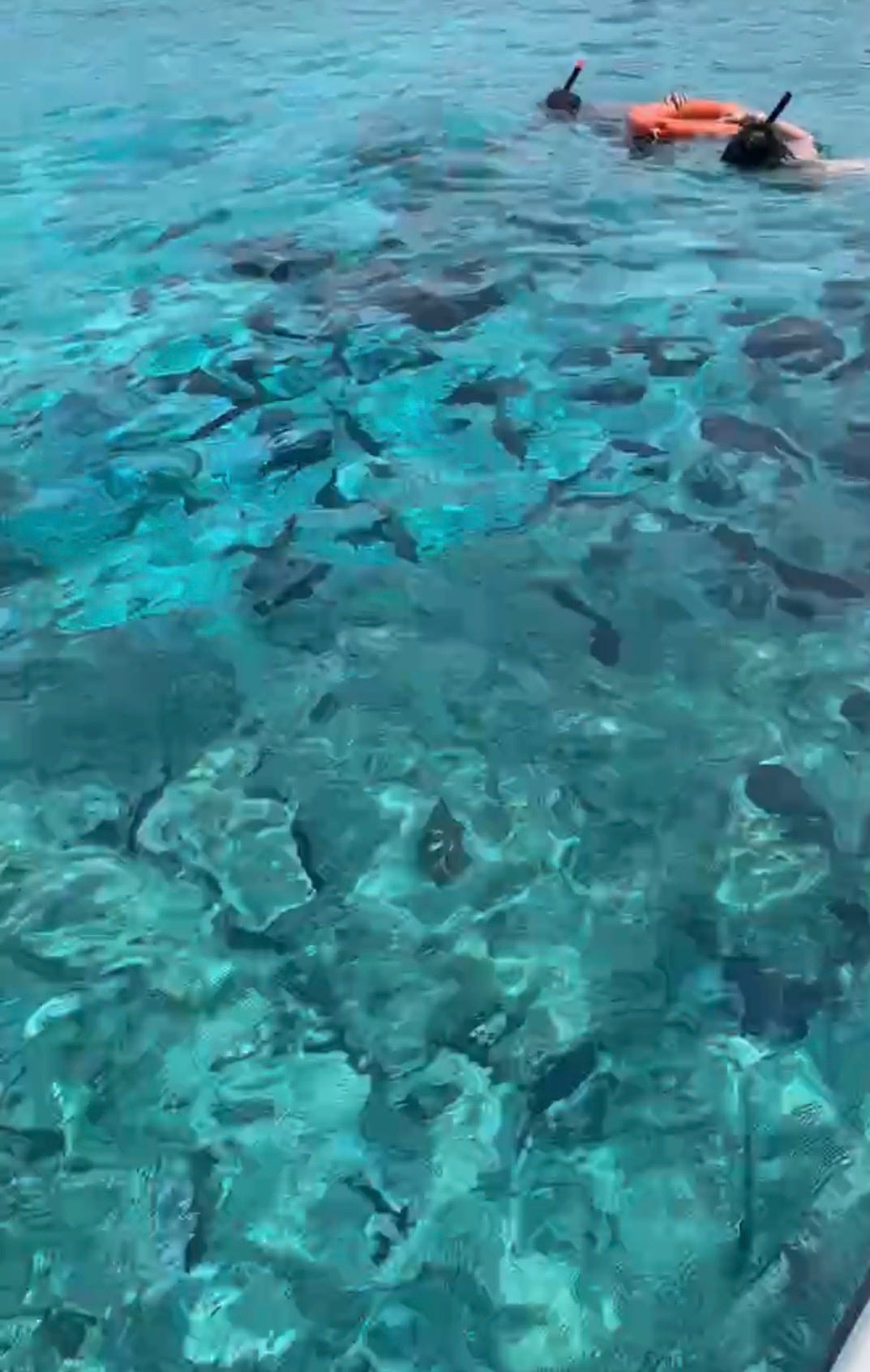
Around reefs. Near deep cliff ridges. Depths I have never been up close to before. The range of rays. I was face-to-face with the gentle giants, reaching out to gently touch them. And oh how they glide, making swimming look like flying with their wing-like fins in a wavy motion. At Stingray Spot, the people on the many boats making their way there threw them skinned squid so they would congregate. Moray and snake eels tucked themselves into nooks. We were encompassed within pods of bright blue, zebra-striped, and turquoise-striped fish swimming so close to us and yet they managed to never touch us. Stretches of spiral-shaped coral gardens at every corner.
All of it proved to me that there is so much to be learned from how, again, in nature, nothing is rushed and yet everything is accomplished. And this is perhaps why biomimicry in software/hardware/infrastructure is so captivating and necessary. Snorkeling was such a magical time that even after we made it back to land and Himmafushi, I felt like I was in the peaceful embrace of being underwater for the rest of the day and to this day if I’m honest.
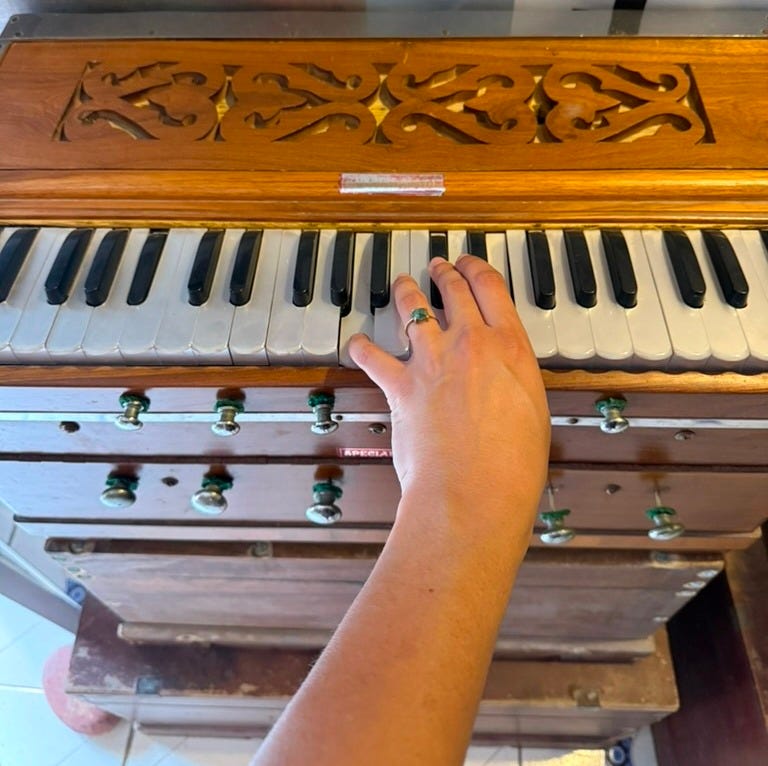
Mujey, our snorkeling/boating guide, also owns a jewelry shop called Lobster Shop. It is worth noting that each shop, including his, on the moringa & bougainvillea-lined inner road accessible directly from the jetty is called “local something” shop. The next shop over is called Mango Shop and it has vintage harmoniums (I did play them) and the owner claimed he can teach anyone to paint in thirty minutes. At Mujey’s shop, he makes all of the jewelry himself. It is wonderful to witness a man of many talents and much fluid intelligence. We contain multitudes.
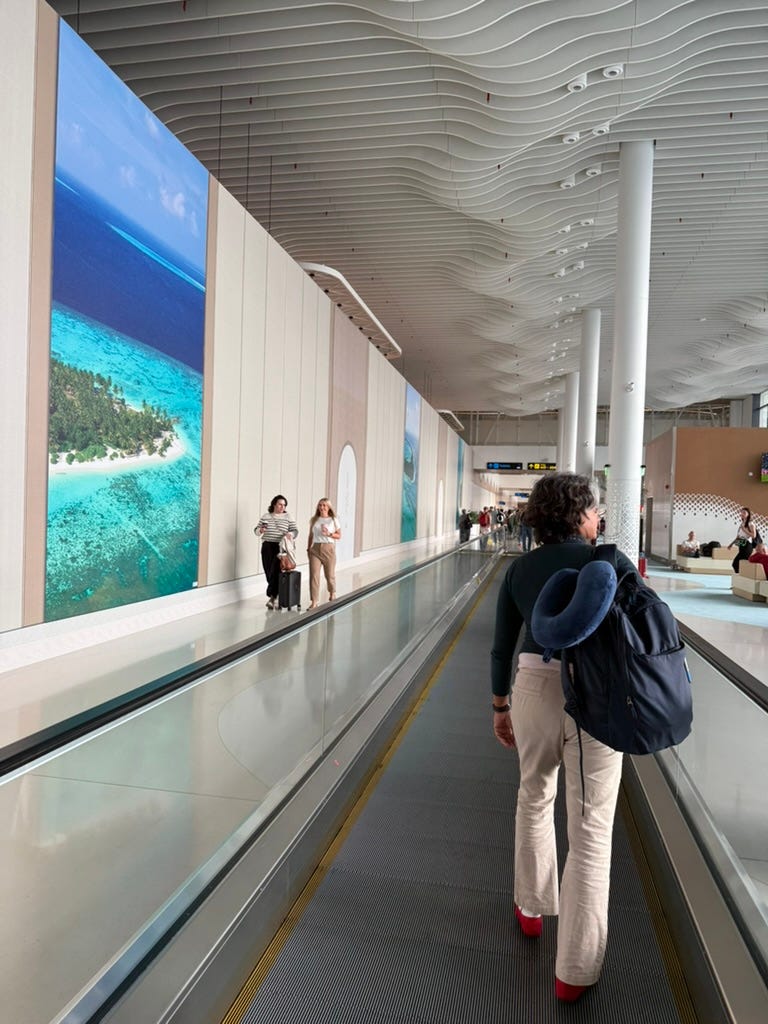
On our final morning in Himmafushi, our host rides with us on our sunrise water taxi back to the airport on his way back to the main island of Malé where he lives. A beautiful white-glove hospitality moment to wrap this experience. With a swift thirty minutes to catch our early morning flight, the classical music permeating the space and the efficiently designed, new Velana international terminal keeps us chill for all that is to come.
Friend, there are so very many miracles to be explored beyond the surface. If this week’s letter resonated with you, I recommend also diving into Suleika Jaouad’s What Lurks Beneath & What Love Reveals. I treasure the way her mind works and how sensitively she handles the nuance and interconnectedness of life. Love in prose — go get you some.
Maldives, you are so loved. I will be back. And reader, please make the trip.
Water you waiting for?!
With much love & to going beyond the surface,
Living vicariously through you friend! Thank you for sharing your stories and learnings 🩷 you inspire me!
loving that quote from Mumma!