

Dear reader,
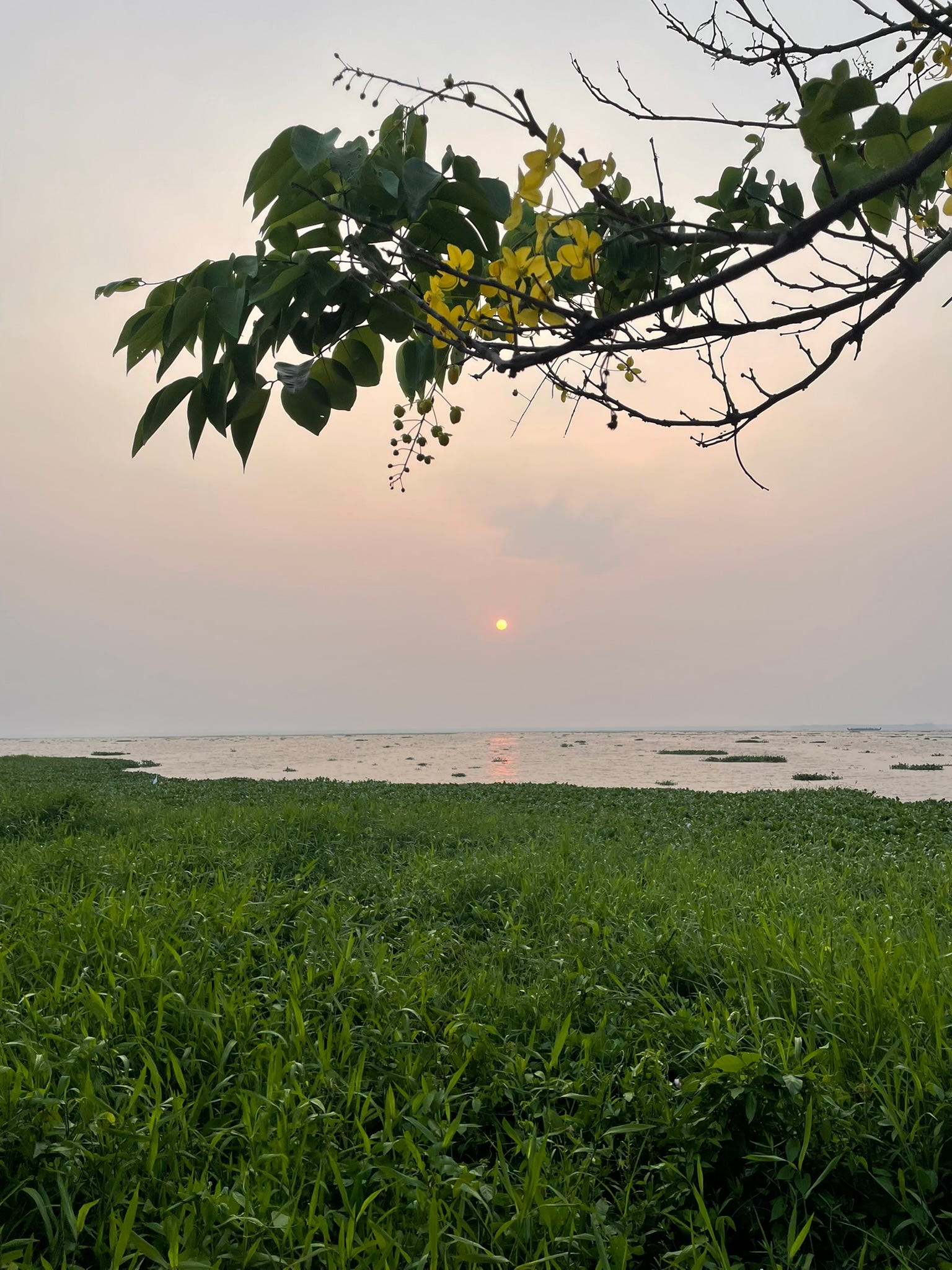
The kayal — a sea inlet — of Kumarakom, Kerala is open water that makes you stop and stare.
Kumarakom is a relatively modern village that sits less than an hour from Changanassery, but it moves at a different rhythm entirely.
Saltwater and freshwater come together in a peaceful dance that humanity could learn from.
I must have known this was coming. Somewhere in the middle of a Kerala night, I apparently sat up in my sleep and sleep-talked: “Can I swim in this lagoon??” A downright whimsical thing to say, I feel. My subconscious, it seems, arrived at the kayal before the rest of me did.
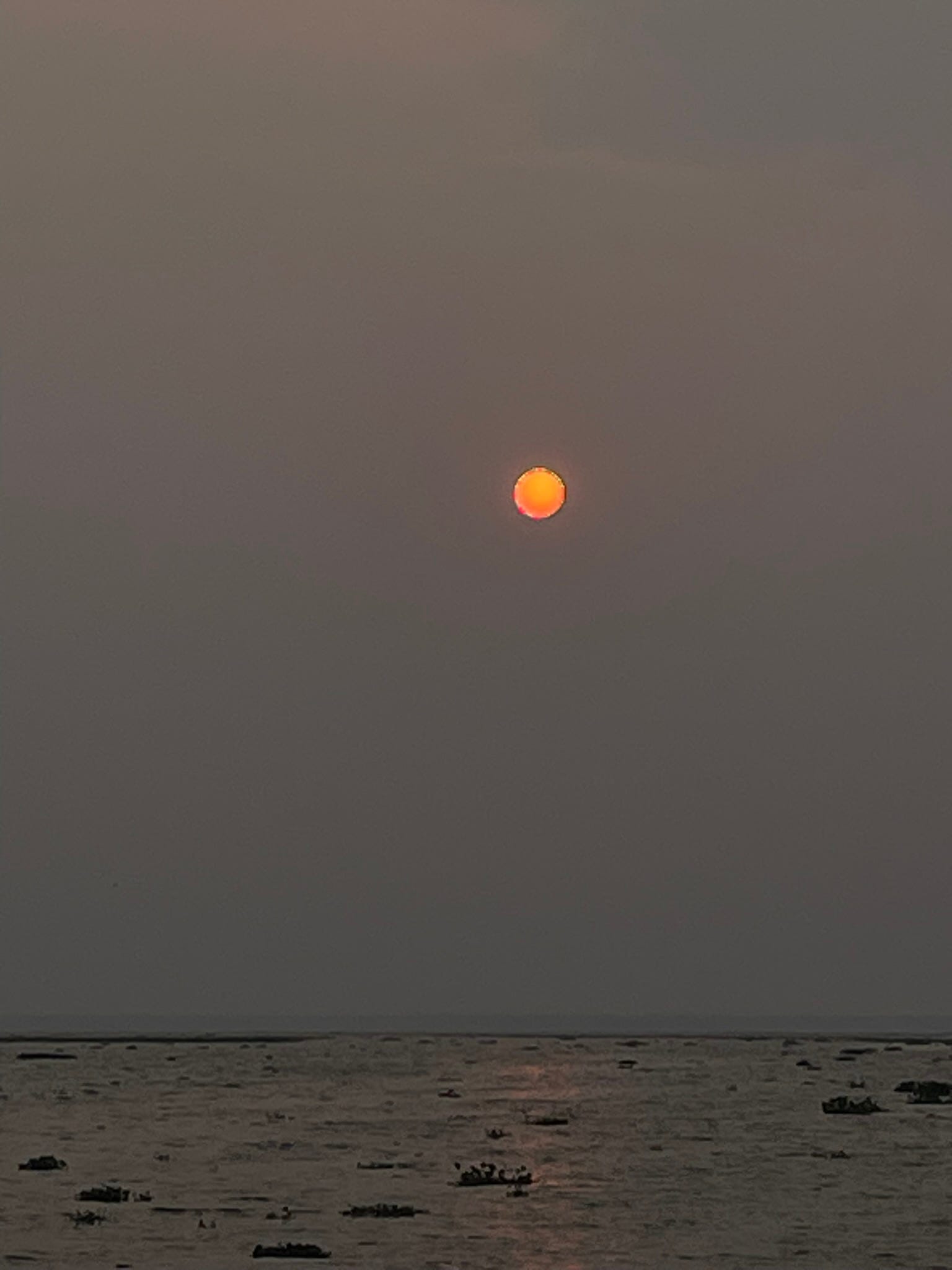
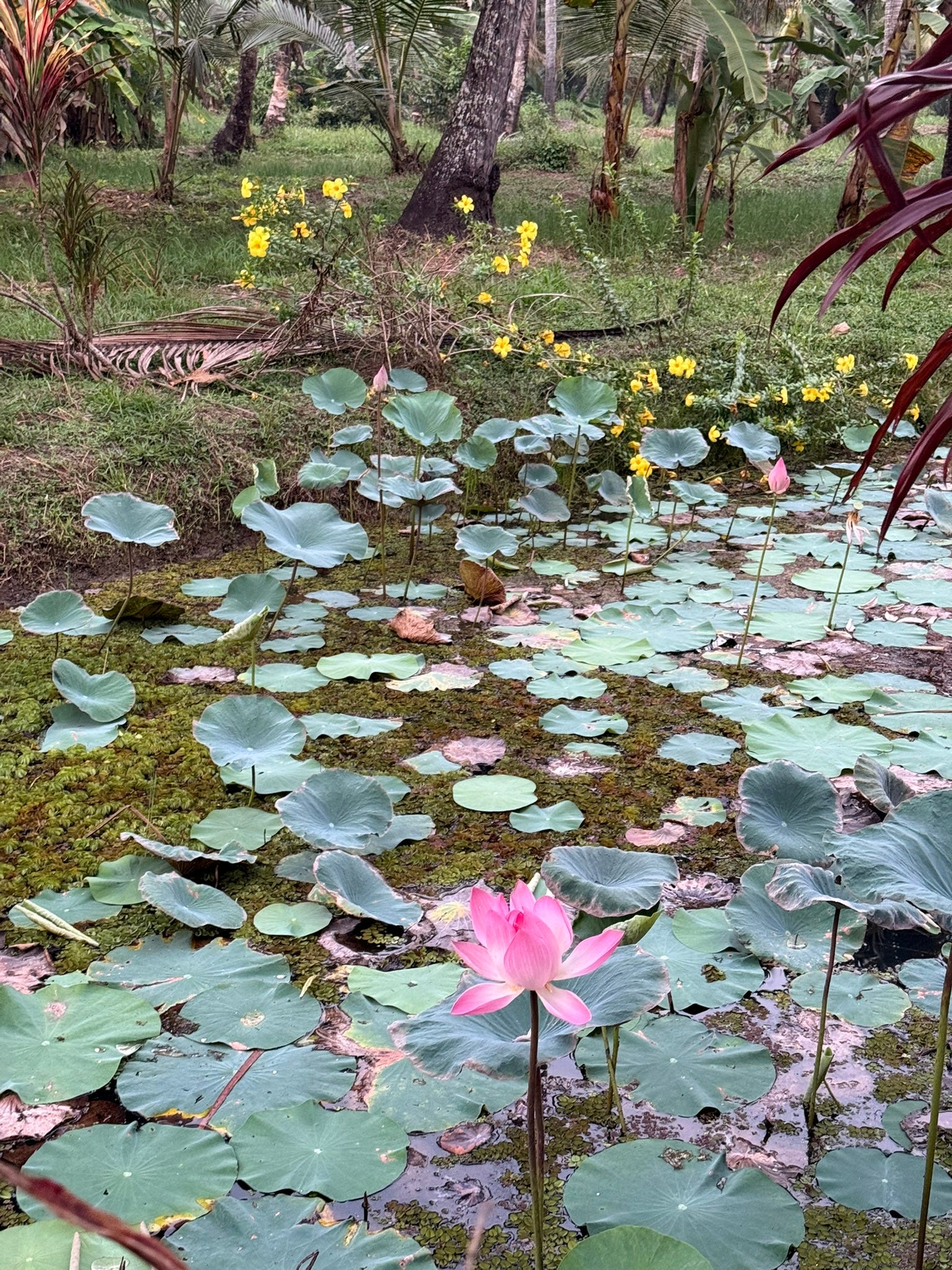
My mom, her cousins, and I watched the striking, deep orange sooryasthamayam, the sunset, sitting on the ledge with the breeze, the birds, and a lone fisherman. Lotuses had opened in the morning. Water lilies would awaken by moonlight. And in between, this: the golden hour, the calming tide, the man and his canoe moving with the kind of muscle memory that only a lifetime can build, gliding around and through the water weeds with a load of fresh catch.
Some of the most meaningful connections on this trip found us through loss. At a gathering of mourners, I recognized a woman I hadn't seen in fifteen years across the field. She invited us to her home for a catch-up. A one-word invitation was all we needed from her: varanam. Come. No matter how complicated the thread that connects us is.
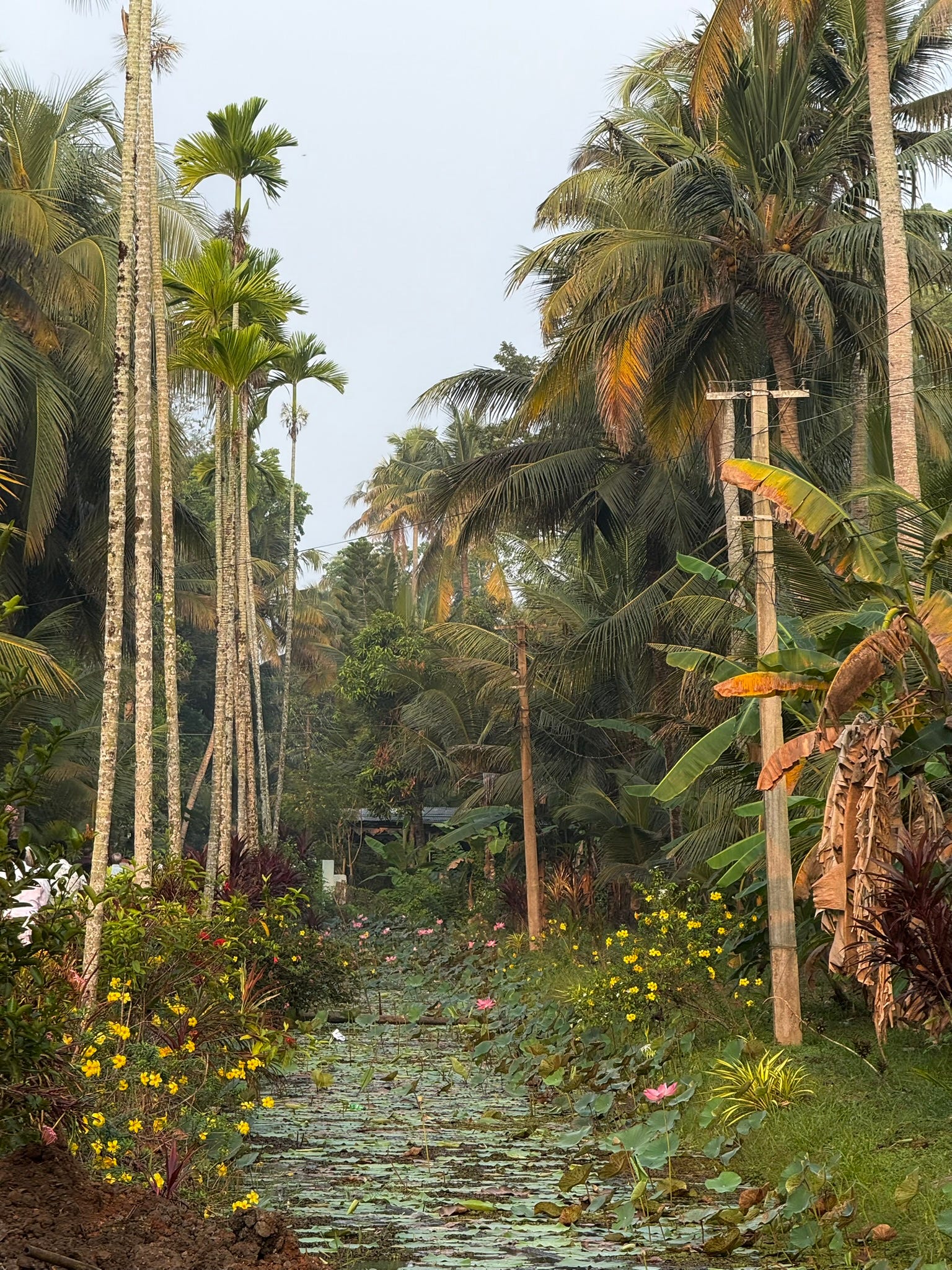
A week later, we visited her on the backwater estate she inherited — her garden organic, her days deliberate. Every day, without fail, she does her physiotherapy exercises, walking her fingers up and down the wall, strengthening her shoulder mobility. Her incredible daughter, who used to know my mom when she was a schoolgirl with long braids, stopped by too, bringing a homemade delicious spongy appam (fermented rice pancake) cake. The two of them moved through the afternoon finding genuine humor in everything — in each other, in the joys of getting older together, in the underrated comedy of life continuing to surprise you at any age.
I sat with them and thought: I hope this is what it looks like when I get to be their age. Women living exactly the way they want to. Clarity of mind, eyes, and words. Fullness of heart.
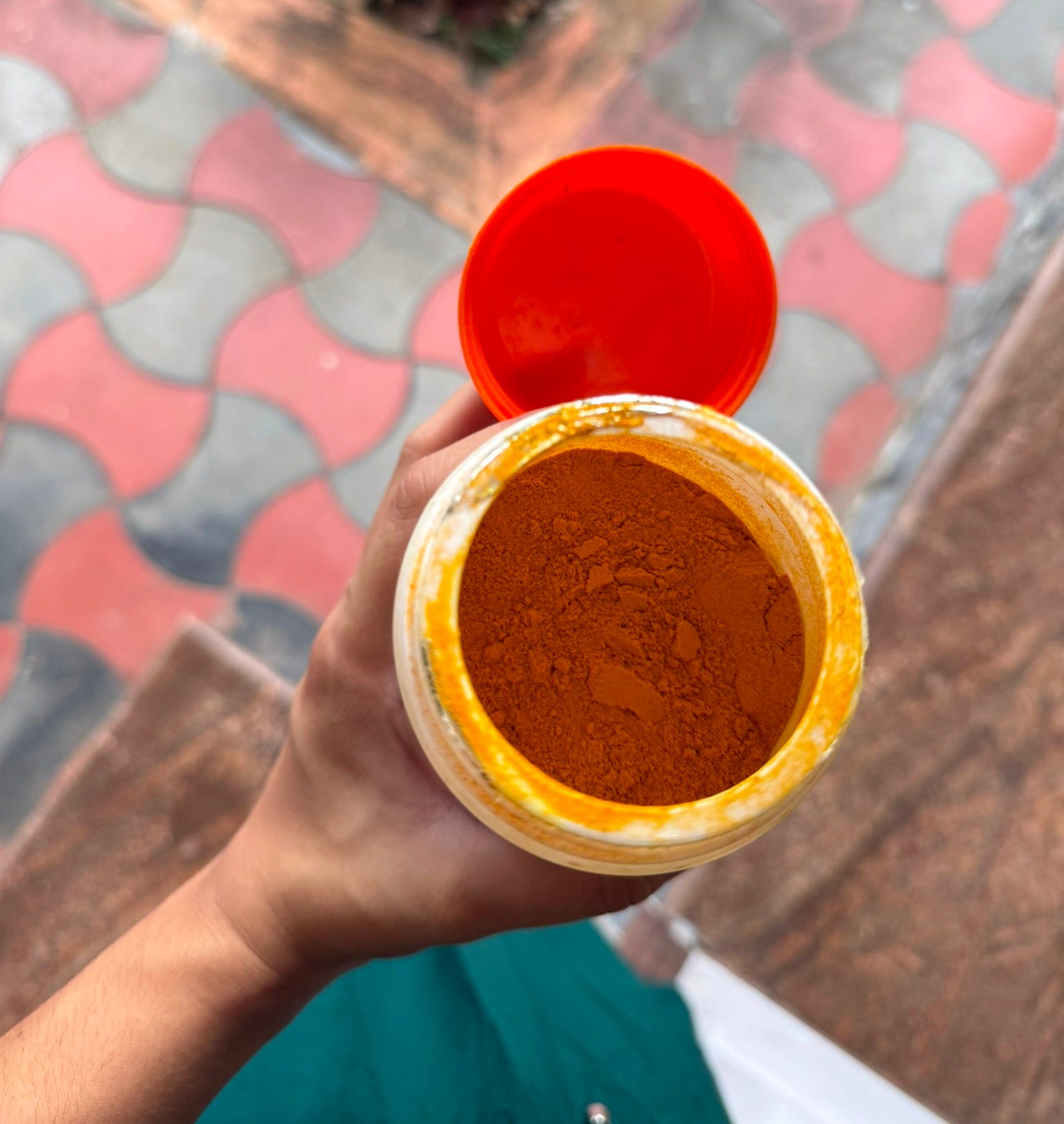
She sent us home with sun-dried bitter gourd and homemade organic turmeric powder, and I make golden milk with it everywhere I go now.
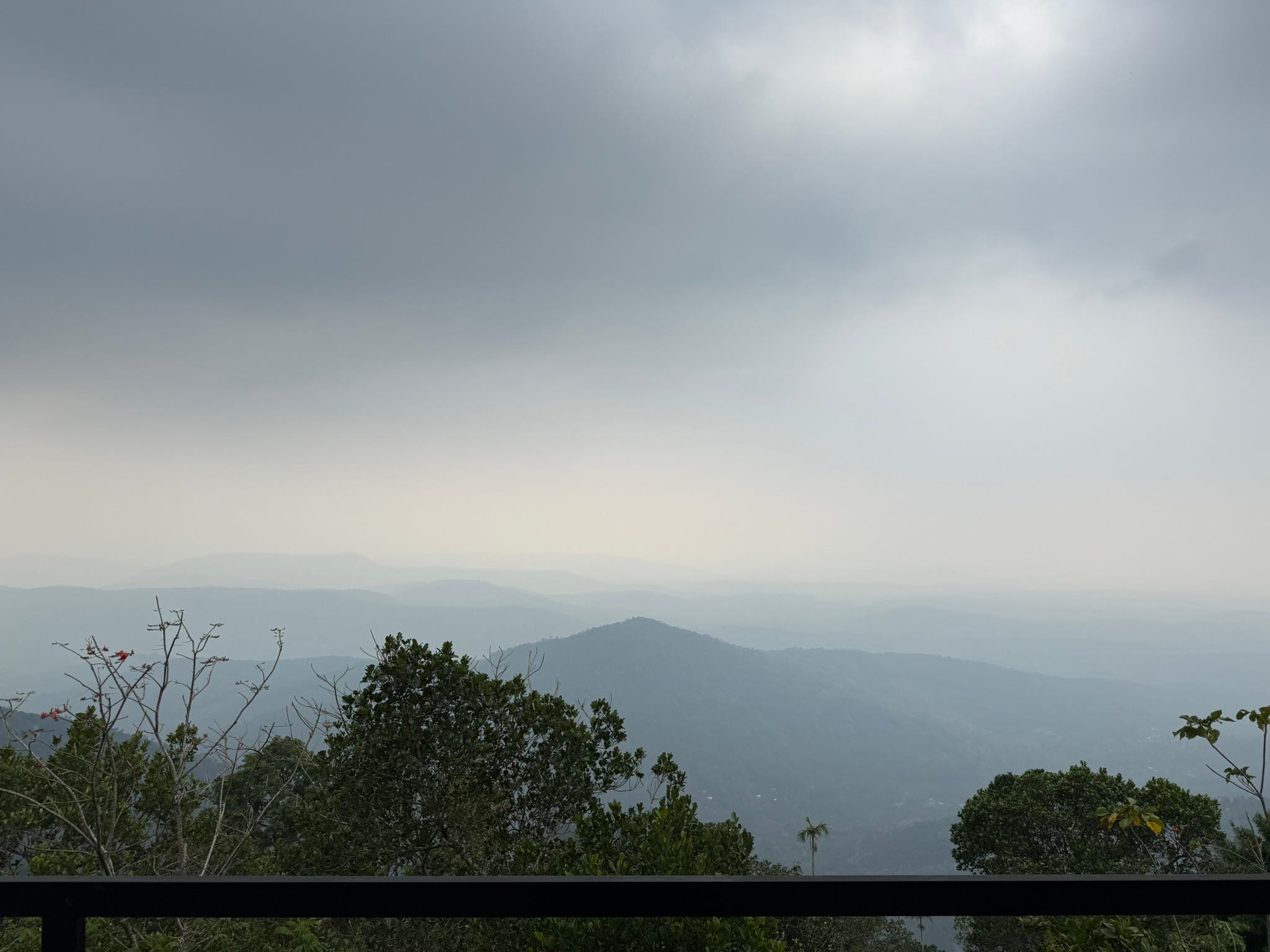
As the last week of our trip arrived, we made our way up closer to the Western Ghats, the hilly, temperate side of Kerala.
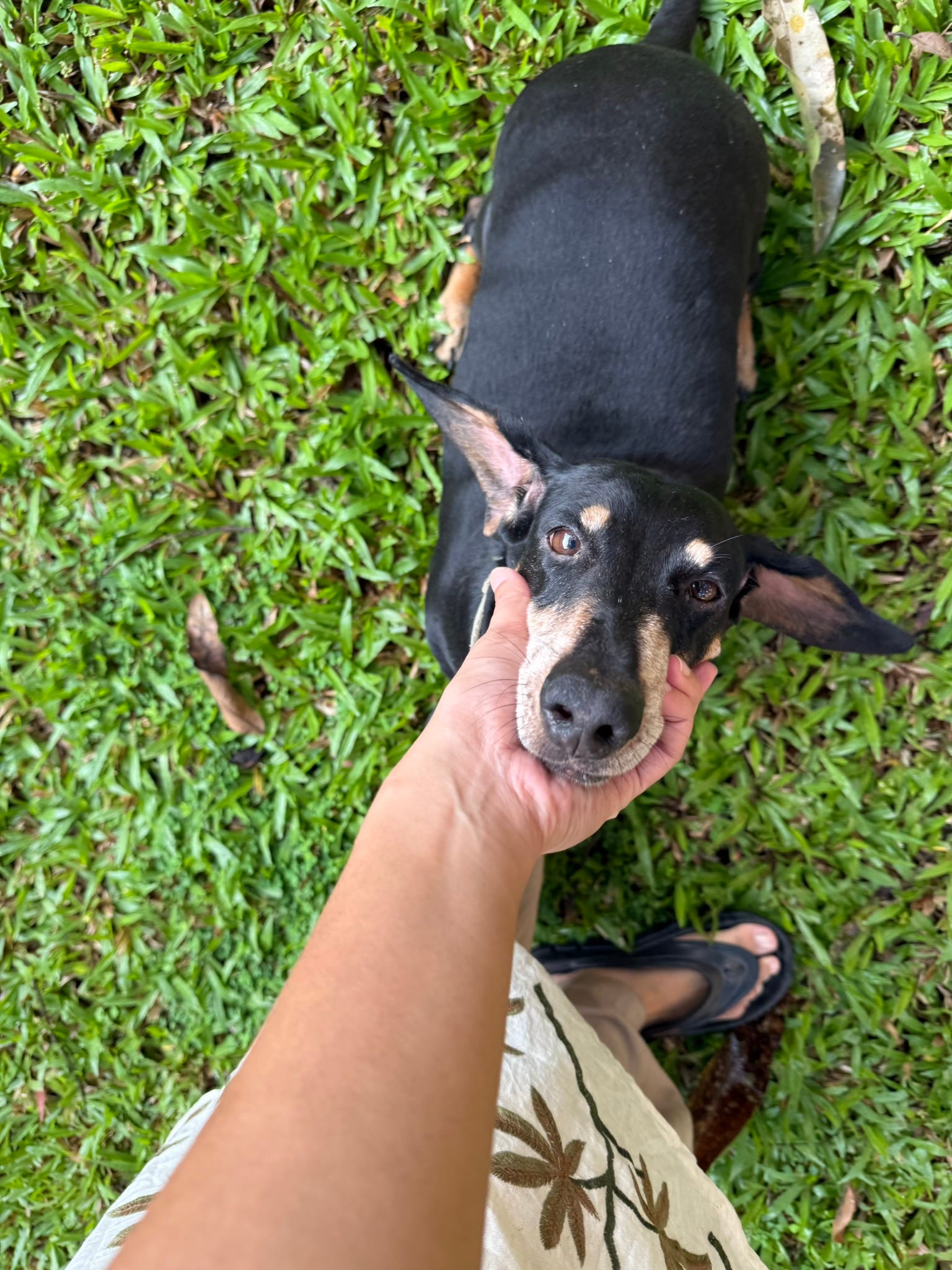
On the grounds of a seminary in the hills near Kanjirappally, there lives a little dachshund mix named Thangu who has been there longer than anyone. He followed me around the rubber plantation path with such cheerful, agenda-free loyalty. He takes his role as companion very seriously.
Thangu’s best friend on the grounds told me that nature holds all of the answers. We only have to trust it. He told me that the ancestors of the crow are evolutionarily a hundred million years old. He said this while feeding Thangu egg yolks for breakfast. The crows sat watching nearby.
I sing a song at sunrise at the chapel in these hills adorned with palms on Palm Sunday. Went with a classic, Gratitude by Brandon Lake. The place called for it. The spirit is in the details.
On one of our last mornings in Changanassery, an 85-year-old woman arrived to clean my grandmother’s property. She had been doing this for another local family for at least five decades — thoroughly, systematically, the way someone cleans who knows the value of everything. On her way out, she gathered tree waste she could use as fuel and took it with her. Nothing wasted.
I offered to help carry her bag of coconuts home. She said no.
She whipped the heavy bag over her shoulder — it was nearly her height — and walked home.
I stood there watching her go and felt something I can only describe as reverence. There are people in this world who do not seek to be honored. They simply live honorably. And in doing so, they teach you what matters.
Over the course of my time in Kerala, I got to witness how villages grieve.
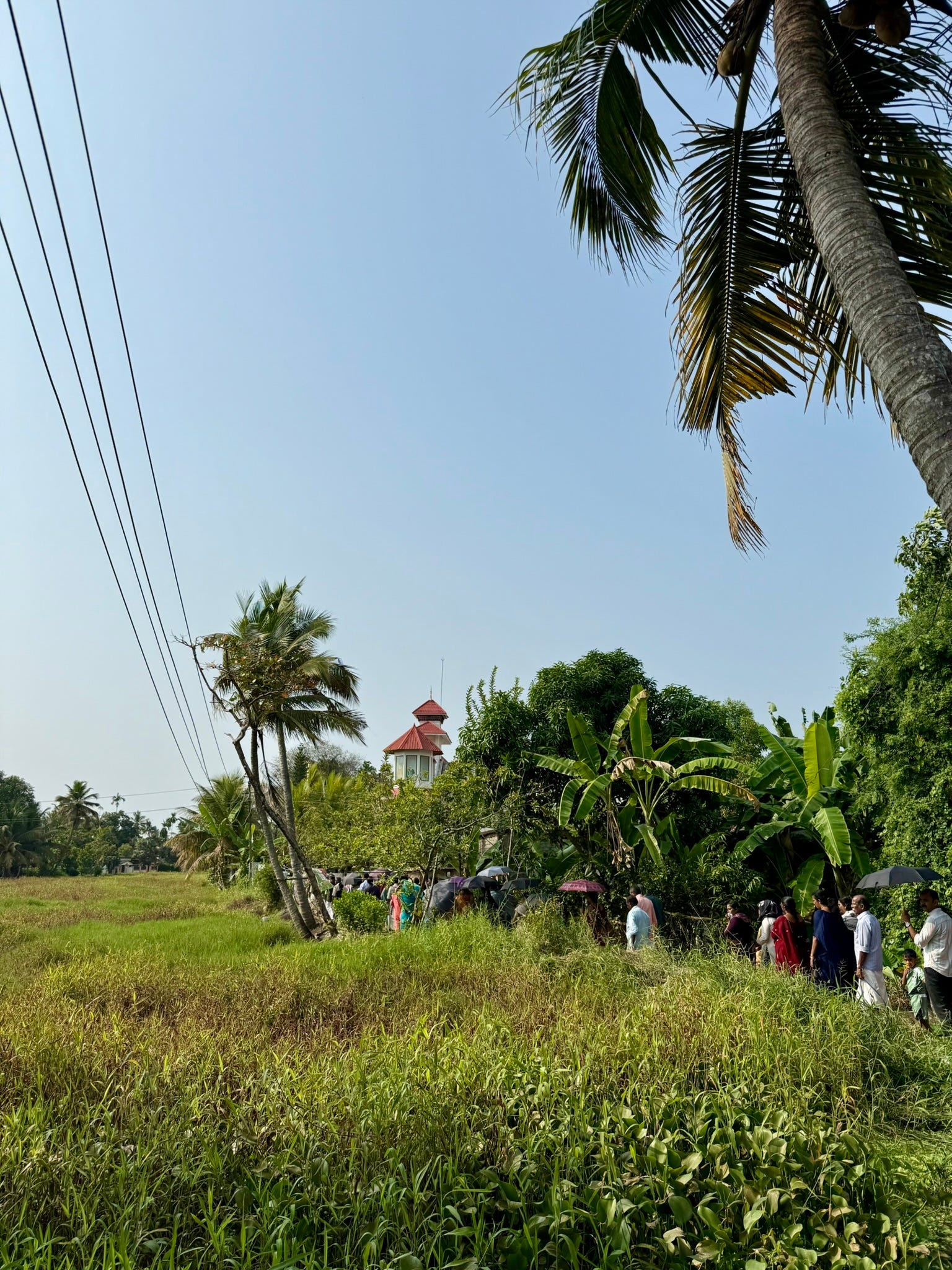
Two beloved elders passed within days of each other. I had the rare experience of joining both communities as they said goodbye. We processed slowly from homes to churches, the whole neighborhood walking together. A young granddaughter said goodbye as they carried her grandfather away, her mother held her back gently. A woman near me said we may never have communities like this again.
But that’s only if we forget the people right in front of us. May we never forget to treasure the beings right in front of us.
During the procession, we walked by echoes of family history and generational stories, the grief, the shared weight of it. The land that grew those bird-beak mangoes my mom grew up on.
Sometimes, for it to be real, you have to touch, feel, and release.
At the burial site, an elderly man I helped to his auto rickshaw had once run a soda business and stitched a dress for my mom almost five decades ago. Another human who shared his many talents generously. The men who passed away were treasured by every member of their villages. They knew everyone personally. They held their community when it couldn’t hold itself alone. My mom’s late cousin taught almost everyone in the village. We went to his old favorite restaurant down the street from his family home, and the chef there was his old student. He sang his praises.
People mostly only remember how we made them feel. Perhaps that’s all that matters.
Perhaps what you’ve inherited is not about always looking back. It is about recognizing how much you’ve already become on your own — how far you’ve had to travel without a map.
And it is also about learning what is worth continuing from the people who came before you. The gestures. The rhythms. The ways of understanding others. And also learning what isn’t worth continuing.
What I brought home from these villages is a recalibration of what I choose to pay attention to. The people I shared with you are completely, faithfully themselves. Their graces were, in part, what they had inherited. From their land. From their losses. But they also chose to let the graces in.
I've found that we don't just inherit genes and/or epigenomes, we inherit the actual lives people live and lived. The choices they made — and the ones that were made for them — in every sense, beyond comprehension.
I come from these people. I come from these places. And sometime in their company, somewhere facing the open water of the kayal, I fully remembered it.
Reader, I am sure you are carrying a lot, in large part because of what and who you’ve inherited.
Not all of it will make sense.
But it is yours.
May you learn how to wield it, and live well with it all.
It’s something I’m learning every day.
With much love & to going beyond the surface,
Anjali
Next week: as my dear friend Diane says — THE WAY WILL OPEN!